



Behind-the-Ear Hearing Aids vs In-the-Ear Hearing Aids: Which Is Right for You?
Audiology Care in Red Bank, NJ
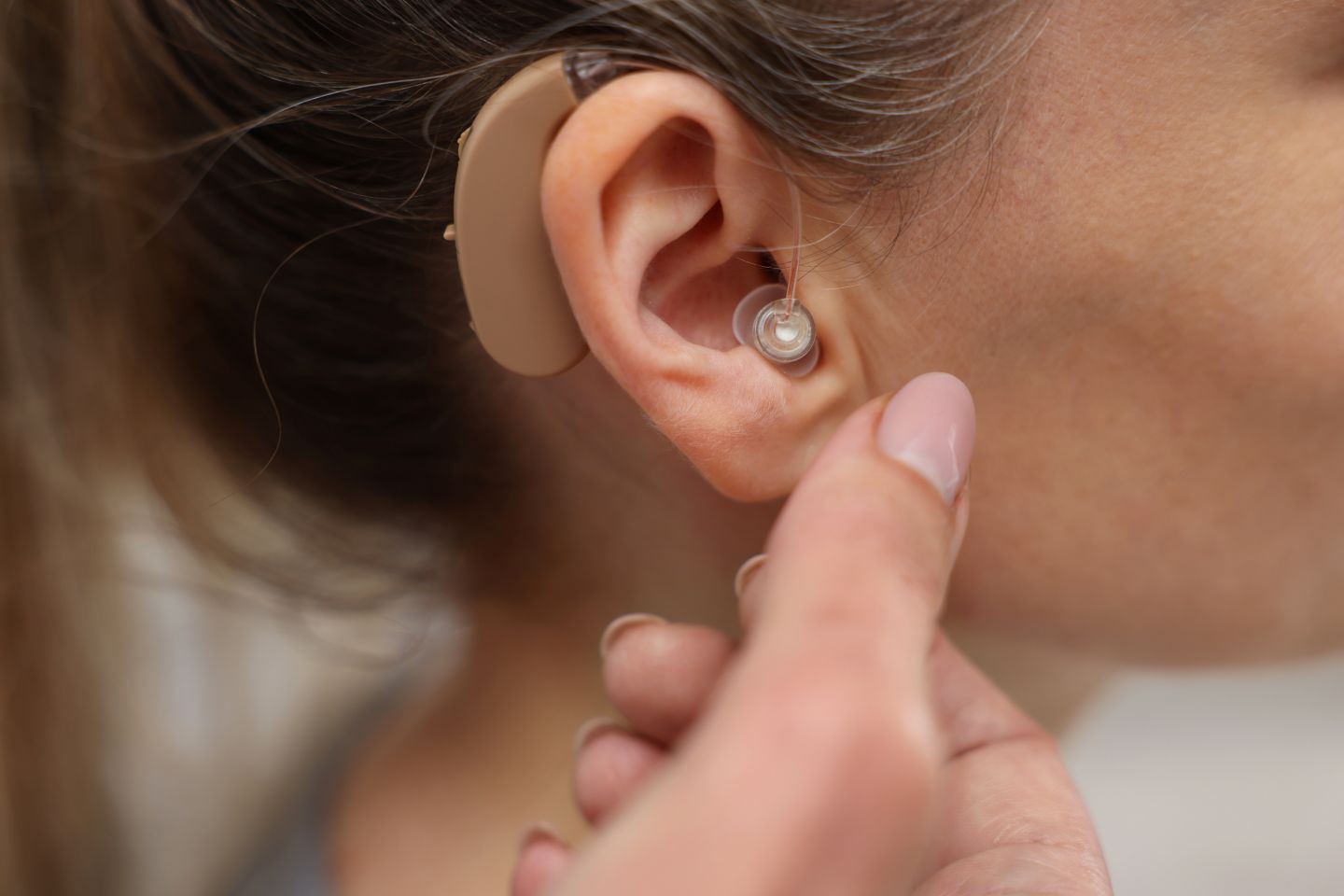
When exploring behind-the-ear hearing aids vs in-the-ear hearing aids, the right choice depends on far more than aesthetics. Both styles can help reduce the impact of hearing loss on daily life, but they differ in how they fit, how they perform across listening environments, and which patients are best suited for each. At NeuroHear in Red Bank, NJ, Dr. Ina Selita approaches hearing aid selection as part of a broader conversation about brain health and long-term quality of life.
If you are ready to start that conversation, call (732) 842-1971 to schedule your consultation.
What Are Behind-the-Ear Hearing Aids?
Behind-the-ear (BTE) hearing aids rest on the outer surface of the ear, with a small casing that sits behind the auricle and connects to the ear canal via a thin tube or receiver wire. This architecture allows for a larger battery, more processing power, and greater amplification capacity than many in-canal styles can offer.
BTE devices are available in traditional configurations and in the widely used receiver-in-canal (RIC) variant, where the speaker sits inside the ear canal for a more natural sound profile. Because the primary components live outside the ear canal, BTE hearing aids tend to be easier to handle and maintain, which many patients find valuable. They are generally well-suited for a broad range of hearing profiles, including moderate-to-severe hearing loss, and may be recommended when greater amplification or specific technical features are clinical priorities. Learn more about what to expect during a comprehensive hearing evaluation to understand which specifications matter most for your profile.
What Are In-the-Ear Hearing Aids?
In-the-ear (ITE) hearing aids are custom-molded devices that sit partially or fully within the ear canal. They range from larger in-the-canal (ITC) styles that fill the lower portion of the bowl of the ear, to completely-in-canal (CIC) and invisible-in-canal (IIC) options that are nearly undetectable during daily wear.
Because ITE devices are custom-fitted to the shape of each patient’s ear, they may offer a more discreet profile for patients who place a high value on low visibility. The placement within the ear canal can also take advantage of the ear’s natural acoustic geometry, which some patients describe as contributing to a more organic sound experience. ITE devices typically work well for mild to moderately severe hearing loss, though candidacy depends on ear canal size, dexterity, and lifestyle factors. Patients interested in exploring hearing aids and personalized fittings can expect a thorough candidacy assessment before any recommendation is made.
Key Differences Between Behind-the-Ear and In-the-Ear Hearing Aids
Behind-the-ear (BTE/RIC) and in-the-ear (ITE/CIC/IIC) hearing aids differ in how they work, who they serve, and how they fit into daily life. BTE and RIC devices position the processor behind the ear and deliver sound through a tube or receiver wire, making them suitable for a broad range of audiological profiles, from mild to profound hearing loss. In-the-ear styles, by contrast, use a custom-molded unit that sits in or at the entrance of the ear canal, and are generally recommended for mild to moderately severe loss depending on ear anatomy.
Both styles require a similar adjustment period of several weeks, and individual results may vary. Where they diverge more noticeably is in power and visibility. BTE devices support larger batteries and widely available rechargeable options, while ITE models use smaller batteries with rechargeability varying by model and size. Visually, BTE devices are partially visible behind the ear, though discreet RIC configurations are available, while in-the-ear options range from partially visible to nearly invisible.
Candidacy considerations extend beyond hearing loss severity. BTE devices accommodate a wider range of loss levels and are often the better fit for patients with dexterity considerations, while ITE styles appeal to those prioritizing a low-profile aesthetic with mild to moderate loss.
Ear canal anatomy, the specific frequencies where hearing is affected, primary listening environments, and lifestyle all factor into which style will perform best day to day. A patient who spends significant time in loud group settings may benefit from features more readily available on a BTE platform, while someone whose primary concern is visibility during professional interactions may find an IIC solution more aligned with their goals. A thorough clinical evaluation remains the only way to arrive at the right recommendation.
Ready to move from comparison to clarity? Call (732) 842-1971 to speak with Dr. Selita directly.
Which Is Right for You?
When weighing behind-the-ear hearing aids vs in-the-ear hearing aids, the most meaningful guidance comes from a detailed audiological evaluation rather than a general preference. That said, some patterns are worth understanding before your appointment.
Patients with moderate to severe or profound hearing loss often find that BTE and RIC devices offer the amplification range and processing power their profile requires. Patients who have limited fine motor dexterity may also find BTE devices easier to insert, remove, and maintain. Rechargeable BTE options have become increasingly practical for patients who prefer not to manage small batteries.
ITE devices, particularly CIC and IIC styles, tend to be well-suited for patients with mild to moderately severe hearing loss who value discretion and are comfortable handling smaller devices. Ear canal size is a legitimate anatomical factor that can affect ITE candidacy, and some patients are simply better anatomical fits for one style over the other.
At NeuroHear, Dr. Selita conducts a thorough assessment that includes real ear measurements and speech-in-noise testing before any fitting recommendation is made. To learn more about how that process works, explore the NeuroHear Vitality Plan, which outlines the diagnostic depth behind every recommendation.
Why Choose NeuroHear for Your Hearing Aid Evaluation in Red Bank, NJ?
At NeuroHear in Red Bank, NJ, hearing care is approached through the lens of neuroscience research. Dr. Ina Selita, Au.D., conducted auditory cortex research at NYU School of Medicine and Johns Hopkins University before founding NeuroHear, and her work has been published in the Journal of Neurophysiology. That academic foundation shapes how she evaluates hearing loss: not as an isolated ear problem, but as a brain health consideration with long-term implications for cognitive sharpness and quality of life.
Whether you are evaluating behind-the-ear hearing aids vs. in-the-ear hearing aids for the first time or seeking a second opinion after a previous fitting, Dr. Selita offers diagnostic precision and individualized care rarely found in a private audiology setting. To see what patients say about their experience, read patient reviews from the NeuroHear community. Questions about coverage and cost? Review insurance policies and treatment plan options before your visit.
Frequently Asked Questions
Is one style of hearing aid more affordable than the other?
Pricing for hearing aids varies based on technology tier, features, and manufacturer rather than strictly on style. Both BTE and ITE devices are available across a range of price points. Custom-molded ITE devices may carry additional fabrication costs. The most accurate way to compare costs for your specific situation is to discuss your audiological profile and priorities during a consultation. Reviewing NeuroHear’s pricing information is a helpful starting point.
Can behind-the-ear and in-the-ear hearing aids be combined or used together?
In most cases, patients wear matching devices in both ears, and the style is typically consistent across both. However, in rare cases involving asymmetric hearing loss or specific anatomical considerations, a clinician may recommend different configurations. This is an individualized clinical decision. At NeuroHear, Dr. Selita evaluates each ear and each patient’s listening needs before making any recommendation about style or configuration.
How does recovery or adjustment compare between the two styles?
Neither style requires surgical recovery. Both BTE and ITE hearing aids involve an adjustment period as the auditory system and brain adapt to amplified sound, which research suggests may take several weeks for most patients. Individual results may vary. Regular follow-up appointments help fine-tune the fitting during this period. NeuroHear’s approach includes ongoing care as part of a long-term hearing health relationship, not a one-time fitting appointment.
What should I look for when choosing an audiologist to help with this decision?
Look for a licensed Doctor of Audiology (Au.D.) who performs real ear measurements, speech-in-noise testing, and a thorough case history before recommending any device. Avoid providers who recommend a style before completing a comprehensive evaluation. Board-certified credentials, clinical training history, and a clear process for follow-up care are all meaningful indicators of quality. Learn more about Dr. Selita’s background and training to understand what sets NeuroHear apart.
Is there value in getting a second opinion before committing to a hearing aid style?
Yes. Hearing aids represent a meaningful investment in both cost and daily experience, and the fitting process benefits from a thorough, individualized evaluation. If you have already been seen elsewhere and are uncertain about the recommendation you received, NeuroHear offers second opinion services. Dr. Selita will review your existing evaluation and provide an independent clinical perspective to help you feel confident in your decision before moving forward.
Take the Next Step Toward Clearer Hearing in Red Bank, NJ
If you are still weighing behind-the-ear hearing aids vs in-the-ear hearing aids, the clearest path forward is a conversation with a clinician who can evaluate your specific hearing profile, lifestyle, and goals. Dr. Selita offers a free 10-minute phone call before any commitment to a visit. Call (732) 842-1971 and take the first step toward hearing care grounded in neuroscience.

Dr. Ina Selita is a licensed Doctor of Audiology and the founder of NeuroHear. With a background in neuroscience research at NYU and Johns Hopkins, she integrates brain-based insights into hearing care to support long-term communication and cognitive health. Her work has been published in the Journal of Neurophysiology and presented at major international conferences. Dr. Selita’s approach combines advanced diagnostics, patient education, and compassionate care to help individuals and families stay connected through every stage of life.
Start Your
Journey
Today. Request a Consultation.
What if your hearing helped you think faster, connect deeper, and stay ahead? We treat hearing with an ongoing lifestyle system, not a one-time diagnosis.